My Addiction to Film Photography
An Opinion From a Novice Analogist and Seasoned Digitalist
4 min read by T. Young.Published on .

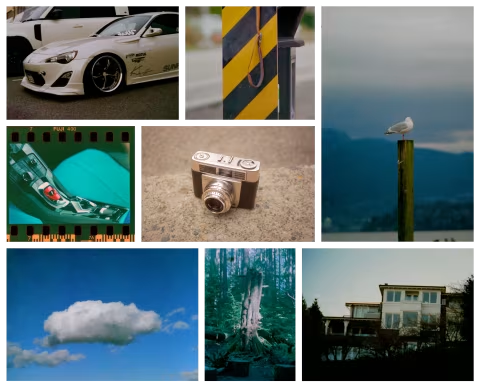
After years of shooting digital, I decided to try film.
What I found pleasantly surprised me. There is far more to this community and practice than I originally thought.
First Impressions.
For years, the idea of film has seemed foreign, something archaic and wrong. I learned on digital cameras, shot digital, and edited everything to the end of the world. As a person who likes quantifiable measurements, I felt that digital was better in every way, from being able to change my ISO to seeing the photos right away; digital just felt right.
But this past year, I was gifted an old film camera that has been in the family since the 1960s, and after getting it working, I loaded my first film this week.
The experience has been transformative. I am now addicted to shooting film.
This essay is my chance to look back at my time with a film camera and try to understand why it has changed my view — perhaps you’ll find something that affected you in a similar way.
What I came to love about film.
Slowing Down. As a person used to digital, life used to be about speed. My digital camera, like many, can shoot multiple frames per second in burst mode and show the results on screen within milliseconds. And don’t get me wrong, this has its uses, but it also encourages carelessness, since we can just take photos and one will probably turn out right. Film taught me to slow down. In my first roll I went from shooting 2-3k photos to 7-10 per day. This change taught me to slow down, frame the scene, and wait for the timing to fall into place.
Light Meters. I have come to like the control I get with an external light meter, compared to auto mode on a digital camera. While many modern digital cameras allow you to change settings after auto mode once it is set, mine does not, and I enjoy being able to use the light meter as a baseline and then make creative choices from that point. At the same time, the light meter teaches you a more innate sense of exposure, a skill that is highly transferable back to digital.
Equipment Cost. When I look at buying a new digital camera, I am often put off by the costs that run upwards of 1k. This is not always the case in film, with many entry-level cameras, especially on the older side, coming in at under $100, lowering the barrier to entry for new photographers. Although film can be quite expensive.
Suspense and Reflection. After finishing a roll of film, there is a wait to get it developed, and this time allows to reflect. When starting out in the film world, many photographers will wait until they develop one roll before they shoot, so that they can learn from what to change. This time also helps with retrospection into one’s own photographic practice.
Things I don’t like about shooting film.
Cost of Film. The cost of film has been rising over time, and this cost does add up. Development adds a further cost to this, and while these costs can force one to slow down, they will also hit the wallet.
Development Complexity. While the C-41 development process is very uniform (although push and pull development do exist), the black-and-white processes are not. Many variations exist, and these all add artistic changes to the film. Hence, handing your film to a lab reduces your artistic control. At the same time, developing the film yourself is a complex and nuanced topic that many photographers do not want to deal with.
My first few rolls of film taught me so much, and yet there is still so much to learn. I know that its adictiveness will continue to draw me in, and show me how to photograph with a more critical eye. Despite the flaws, I find it difficult to stop learning, discovering.
Film cameras, and their quirks, have allowed me to discover a new love for this art and develop my skills at the same time. I highly recommend everyone who is into cameras to try it at least once.
