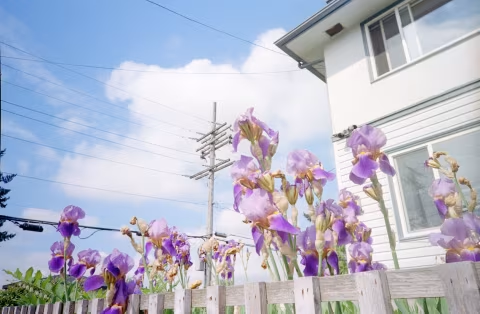
Kodak Pro Image 100 Pulled -1 Stop, Overexposed +1
With Snapic A1
5 min read by Dmitri, with image(s) by Betty.Published on .


I’m never shy about praising Kodak Pro Image 100. This film is an underrated emulsion with impressive climate stability and colours akin to the premium Portra / Ektacolor Pro films — but much easier to scan.
Its downsides, compared to premium Kodak films, are larger grain and a tight dynamic range. Yet I regularly buy boxes of five, as this is one of the cheapest options for colour — and it delivers.
I’ve compared it to the new Kodak Kodacolor 100 — the films are not the same — I’ve pushed it two stops, and it did okay (the process gave the film a warm cast, which looked great in some shots — but not all).
Pull-processing has the potential to extend the exposure latitude (thus making the film a little more forgiving of my mistakes) and to take advantage of the finer grain particulates, making the images appear smoother and more detailed.
A slight modification to the development method and an exposure index of 50 instead of 100 is a win-win-win, especially for the camera I wanted to test it in.
Kodak Snapic A1 is a simple fixed-aperture, fixed-shutter-speed camera with an ultrawide 25mm glass lens. Functionally, it’s similar to the disposable and reusable cameras — there’s no way to adjust exposures, and there are just two focus settings. Yet it’s perfect on a bright day: shooting in direct sunlight makes consistent results, and if that’s the creative limitation, the reward is a cheap ($100), pocketable compact with motorized film transport and uncharacteristically nice optics.
Taking advantage of the Snapic A1 in full sun means considering its fixed f9.5 lens and 1/100s shutter speed, which suggests that the ideal film speed for this camera is ISO 25 (according to the Sunny 16 calculator). But as I wrote earlier, overexposing certain films can work and even give rather desirable results.
So I’ve decided to combine the two: overexposure (+1 stop, by rating my film EI 50 instead of the needed ISO 25) and pull processing (-1 stop, from the box speed of ISO 100 to EI 50).
If you don’t develop at home and the above jargon sounds confusing, simply set your manual camera ISO to 50 and ask the lab to pull the film one stop.