Optik Oldschool SantaColor 800 Film Review
Christmas in July?
10 min read by Dmitri.Published on .

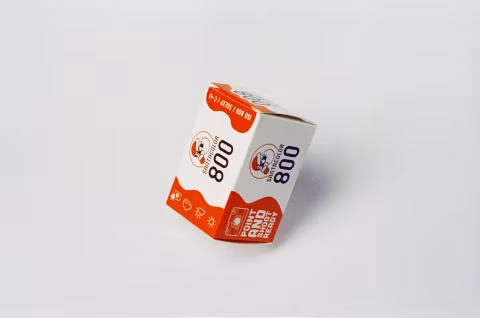
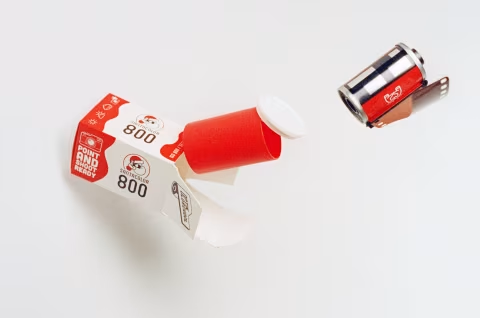
Optik Oldschool SantaColor 800 is a new high-speed colour-negative film, sold in delightful packaging.
Santa, a film brand originally created by a Finnish film camera retailer, is now operated by the German Optik Oldschool film lab, whose packaging design and quality are evident in this film’s beautiful appearance.
In this review, I present my version of why the name, share lots of samples and technical data, compare SantaColor 800 with other films in its range, and briefly discuss its origins.
In this review: Why the name, Santa? A brief history of the prominent European film brand. The colours. Grain, resolution, sharpness. Contrast, dynamic range, and exposure tips. Scanning and developing at home. How much does this film cost? Where to buy. Support this blog & get premium features with GOLD memberships!
Why the name, Santa? A brief history of the prominent European film brand.
While Juho Leppänen, the founder of Kamerastore (a Finnish film camera specialist shop), mentioned Santa by name many times in the marketing material for the film/brand, I never felt like the name was explained particularly well.
The story of SantaColor is that of the in-house film-spooling and packaging brand, self-tasked with supplying the starved-for-film photographers.
Launched around July/August 2019, Santa was introduced as a reference to the interplay between gift-giving and surveillance in Christmas holiday folklore. Good children get gifts, bad kids get lumps of coal — the Santa knows who’s who because he’s watching. If you grew up in that culture, that may be the most light-hearted way to think of surveillance, which was at the core of the company’s first product: Santa 1000.
Santa 1000 was a black-and-white surveillance film manufactured by the Russian Tasma factory, which Kamerastore spooled into individual 35mm film canisters and sold to its growing list of interested customers (Santa’s “nice” list).
Tasma is the only film factory in Russia, making it the only possible source of the Santa-branded black-and-white films, as evidenced by Kamerastore’s statement explaining the company’s decision to discontinue its monochrome line. This was in protest of Russia’s invasion of Ukraine in 2022, and to prove they’re serious, Kamerastore (the parent business out of which SantaColor spun out) donated over 20,000€ to Ukrainian refugees.
But Santa wasn’t done with film, as the brand immediately launched an Indiegogo campaign to acquire a large bulk roll of colour aerial surveillance film made by Kodak. The minimum order was around $100,000 for a professional photographic product still in use (as-intended) today. The campaign succeeded, giving Santa another check for delivering film previously unavailable to still photographers to the store shelves and our cameras.
The origins of SantaColor 800 are less clear. The December 2025 launch of this film coincided with Santa changing hands and becoming a part of Optik Oldschool, a brand known as one of the select few distributors of the new German-made ISO 200 colour-negative film.
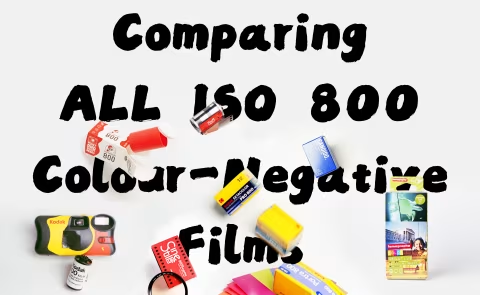
The new ISO 800 film has no edge markings and, according to my recent tests comparing 8 ISO 800 colour-negative films, is a little different from the other Kodak-made fast colour-negative films — but it’s definitely made by Kodak.
The colours.
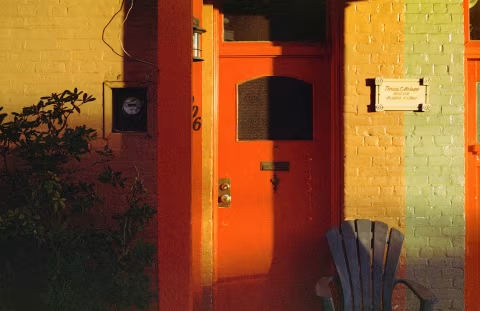
I will explain my development and scanning setup below; my results tend to align with those most photographers get, especially when scanning at home. For this film, it’s medium-high saturation, with a tendency to skew towards the purple-green range in the shadows, which I find typical with most Kodak colour films other than the Kodacolor Pro (Portra) series.
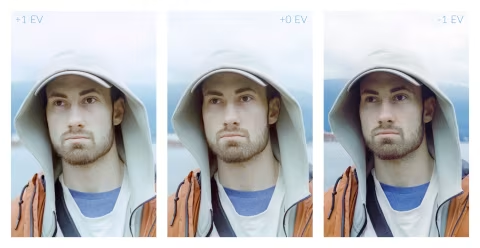
The outdoor portraits of my brother were shot in overcast weather, when the light was even and cool. As you can see in the samples below, even in those light conditions, the film rendered saturated colours — particularly the blues and the oranges — with somewhat muddy shadows. I found that this could be corrected fairly well by overexposing this film by one stop — i.e., shooting SantaColor 800 as if it’s an ISO 400-640 film and developing normally.
As one would expect, unobstructed sunlight creates more contrast on film, while the general pull towards saturated oranges remains apparent, at least in the shots that contain the colour.
The shadows still look somewhat brown and noisy, which is not unusual for colour-negative films. That cast could be corrected, of course, but that may throw the rest of the scene out of balance.
I used the techniques from my “How to Edit Film Scans” guide to set the colour balance for all my shots.
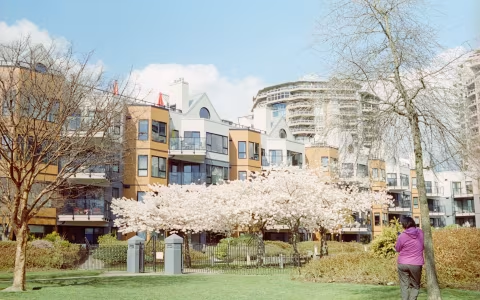
This film can certainly render saturated blue colours, yet I still found that the presence of orange will often steal the show.
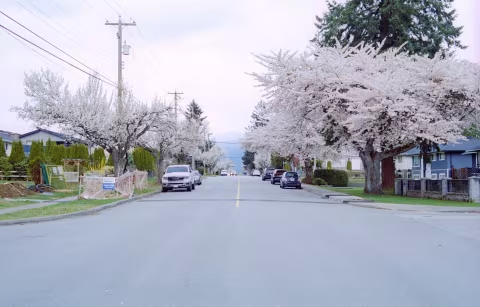
Clear skies in Vancouver can look exceptionally stark. Out of all the destinations I’ve travelled to and lived in (which includes both coasts in the US and Canada, Southeast Asia, and Russia), the blues here are exceptionally deep after months of winter rain clearing the air so that we can see all the way into space with minimal interference from dust and aerosols.
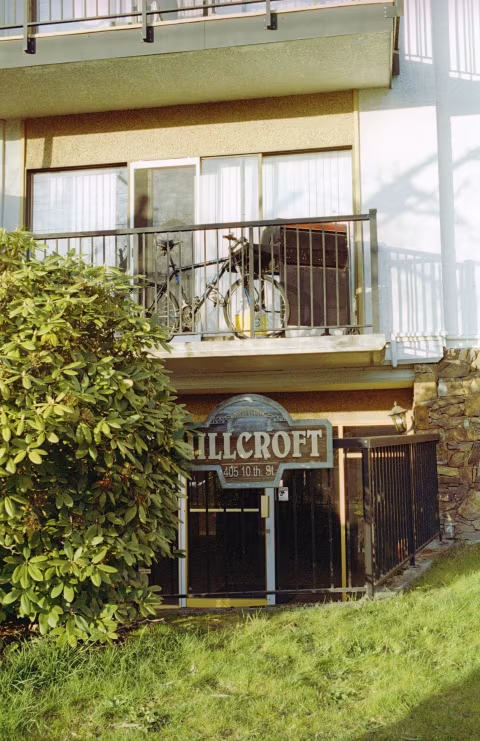
This is why the photo below isn’t fully representative of how most people see the clear skies here. Sure, I could add some blue and reduce the green there, perhaps add more contrast in post, but that would add a colour cast to the obvious greys in the image, which I typically like to avoid.

Attentive viewers may’ve noticed blurry green streaks in the shadows, over the telephone number and the street name in the photo above. These look like light leaks at the point of film assembly, as this hasn’t happened before or since on my Asahi Pentax MX — and I’ve also tested this film in my Nikon F2 with a completely different set of lenses for the ISO 800 film comparison.
You can see that defect on the first few frames of my roll much more prominently. I don’t hate the look it created out of my images in this case, but that’s something to be aware of:

Grain, resolution, sharpness.
SantaColor 800 is not unlike the rest of the fresh ISO 800 colour-negative films on the market today when it comes to grain and resolution. All of those films are made by Kodak; they can look noticeably different, but in general, the grain structure is visually identical when scanned on my dedicated high-resolution Nikon SUPER COOLSCAN 5000 ED.
Practically speaking, the grain is impressively fine, as it may even appear less noticeable than on some ISO 800 black-and-white stocks and is marginally more prominent than on the ISO 400 film stocks.
Compared to the Ektacolor Pro (Portra) 800, Kodak’s top-of-the-line fast colour-negative film for still cameras, SantaColor 800 may look a little sharper, but that’s likely due to its higher overall contrast, which typically comes at the cost of a slight reduction of the dynamic range.
Contrast, dynamic range, and exposure tips.
One of my favourite things about Ektacolor Pro / Portra 800 is how well it can tolerate over- and underexposure. That film can be shot at ISO 200 and still deliver good results without adjusting the development times.
I don’t think the same is possible with SantaColor 800. As you may have noticed from the bracketed portraits of my brother above, this film can begin to exhibit signs of colour cast even when it’s over/underexposed by +/-1 stop, which becomes progressively more difficult to fix with greater exposure changes. The photograph below, which spans roughly 8-9 stops between the shadows and the highlights, is already demonstrating significant loss of detail around the tires on the side of the larger boat:

Still, I don’t think it’s necessary to have an extensive dynamic range at all times. What this film offers is quite reasonable, actually.
If I had one complaint about the results that I got from SantaColor 800, it would be the muddy shadows — not the dynamic range.
The film canisters come with DX code, which is very convenient for point-and-shoot and autoexposure cameras. So for the best results, I’d overexpose this film by about half a stop to help reduce noise in the shadows.

Scanning and developing at home.
Like all my films, I developed SantaColor 800 at home and scanned it using my dedicated film scanner with VueScan set to slide/positive, so that I can archive my most complete digitized version of this film — a digital negative. I then quickly inverted all my frames as a single batch in film Q and corrected the colours in Photoshop.
Out of the tank, this film is a little curly, but nothing to be concerned about. However, I suggest you clearly mark your archived film strips, as there are no edge markings on this film. A tool you can use to keep track of all your films is Film Log.
How much does this film cost?
As of July 2026, Optik Oldschool SantaColor 800 sells between $22-$25 at reputable film photography stores in the US and for slightly more in the UK and EU. This can be considered pricey, especially compared to other films in this category, though that, too, will depend on your shop and what’s available for high-speed colour-negative films in your area.
Where to buy.
You can find this film at the Optik Oldschool’s website, or you can use the link below to get a slightly better deal (as I write this) at one of this website’s partners:
❤ Please consider making your Optik Oldschool SantaColor 800 film purchase using this link so that this website may get a small percentage of that sale — at no extra charge for you — thanks!
