Candido 800 Colour Negative Film Review
10 min read by Dmitri.Published on .

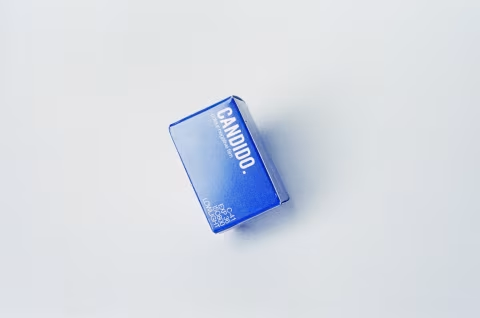
Candido 800 Colour Negative Film is a new, affordable high-speed colour-negative film product from a UK brand — available worldwide.
For this review, I’ve shot this film in three different lighting settings — daylight sun, daylight overcast, and studio light — and each time it surprised me. Unfortunately, those surprises weren’t always good, especially when I pitted Candido 800 vs. other ISO 800 colour-negative films on the market.
In this review, I’ll talk about the advantages and the drawbacks of this new film, share my insights on how to make the best of it, and give you my thoughts on whether it’s worth the price — along with lots of samples in both tricky and basic lighting.
In this review: What is Candido 800 Colour? The colours. Contrast & dynamic range. Grain, resolution, sharpness. Scanning. How much does this film cost? Where to buy. Support this blog & get premium features with GOLD memberships!Thank you, Evan, and @lilianlihua, for being patient models for this article.

What is Candido 800 Colour?
Candido 800 is one of the most interesting products on the film market today. Based on the edge markings found on developed film strips and the colour of the orange mask, it appears to be Kodak Vision 3 500T (EJ 5219). The surprising bit is that this film is sold (and works as) a daylight-balanced film, and it’s rated for ISO 800.
There’s a significant, easy-to-spot difference between daylight and tungsten-balanced films. You may be familiar with the teal overcast on CineStill 800T scans shot in daylight. They can be prevented with a special filter. But you don’t need a filter to shoot Candido 800 in daylight, suggesting that some changes were made to this film before it was wound into 35mm cartridges.

Removing remjet or simply shooting ISO 500 film as if it were an ISO 800 film is typically not a good idea. When I tried doing exactly that with my rolls of Kodak Vision 3 500T film, the film’s sensitivity dropped significantly, and the results were not good — it was still very much a tungsten-balanced film.
Remjet plays an important role in motion picture films — it provides lubrication for fast-moving reels, prevents static discharges, and prevents halation. But, as you can see in the samples in this article, there is no halation in any of the Candido 800 frames. Perhaps it’s the new Kodak AHU product? Strangely enough, Candido’s website shows examples with halations; perhaps this is a different batch.
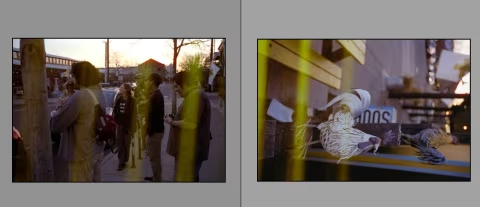
✹ Update: Shortly after publishing this article, I’ve had a few people respond saying that their version of Candido 800 did have halations (earlier purchases), and others said they did (newer purchases). Also, @kurtwphotog shared results with yellow light streaks, suggesting that this film may have had some pre-exposure treatment, which may be making this originally tungsten-balanced stock work better in daylight.
Given that the base material is among the most advanced colour chemistries ever created and that the modifications clearly require skills and tools, Candido 800 offers a promise. And it does work well in some scenarios. But how does it hold up as an everyday stock? Is it good enough for portraits?
The colours.
This film is visibly different from CineStill 800T or Portra / Ektacolor Pro 800 — especially if you pay attention to detail or look at decent portrait scans. Yes, it’s another ISO 800 film made by Kodak, but, as I’ve pointed out above, it’s not exactly that. Besides, there are many variations of fast colour Kodak films, and they are all a little different — Candido 800 is very different.
I shot my first Candido 800 roll during an overcast hike with Evan. I felt it produced good results. I was able to get the colours right, with just a slight blue cast appearing in the shadows and a minor green tint in the mids. The film worked well when exposed normally and when under- and overexposed by one stop.
I used film Q to invert my negatives, which I scanned with my Nikon SUPER COOLSCAN 5000 ED.
However, to get the colours you see in this article, I had to do a fair bit of colour correction to counter the strong green cast the film rendered by default. I will cover this issue and solutions in more detail below.
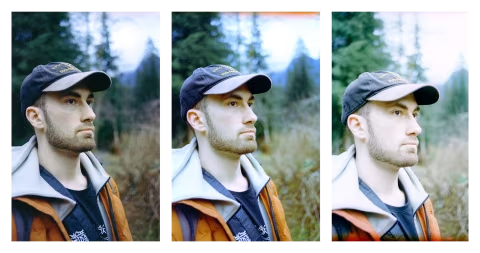
Despite the extra work I had to do, both portraits and foliage looked reasonably natural with Candido 800. It appears to have a wide gamut, which, unlike some new films on the market, made the scans look vivid and full of detail. In other words, it didn’t paint Evan’s face in limited shades of yellow or the leaves behind him in a single green hue.
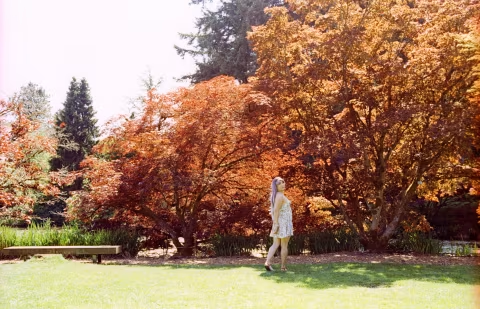
However, I felt like Candido 800 performed worse under warm sunlight. It made Lilian look somewhat green — even in the absence of the green light reflected from the foliage around her. I did not like that.

Neutral objects, such as rocks in the photo above, which should appear mostly grey, turned teal in the highlights.
These were just two rolls of Candido 800, inverted using a fairly simple method, so you can take my opinion with a grain of salt, but I would think twice before selecting this stock for portraits.
You can compare what you see here with my results on Fujifilm Superia Premium 400, which rendered much better colours using the exact same scanning and inversion methods. It needed little or no editing.


This tendency of Candido 800 to add yellow or green casts to skin tones is also evident when it’s compared against all other ISO 800 colour-negative film stocks under controlled light with colour cards.
Contrast & dynamic range.
Candido does not share any technical information about their film, yet, based on what I’ve seen, it seems to handle high-contrast scenes well. The colour casts can become more prominent in deep shadows and bright highlights, but not as much as on some other colour stocks.
Because of that, Candido 800 is pretty easy to expose — it can be forgiving of exposure mistakes and is well-suited for learning the Sunny 16 rule.
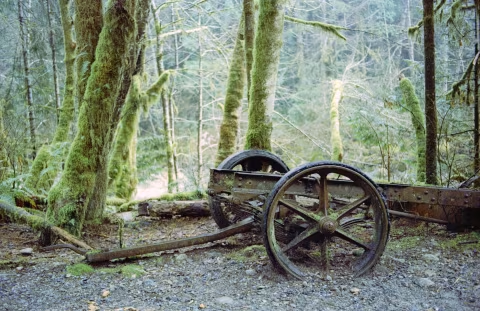
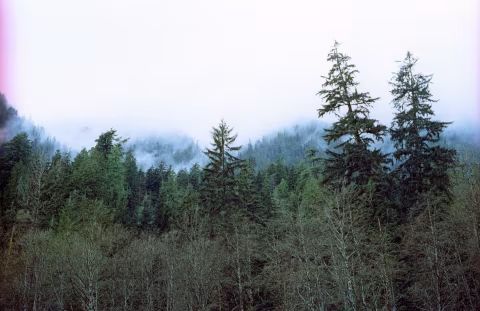
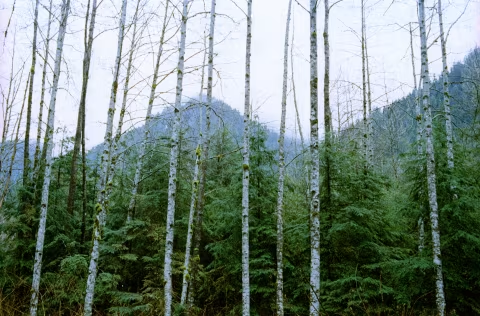
The foliage can look a little strange on this film, but that may not be as important, especially under overcast light when there’s simply less colour variation to capture. I enjoyed the results I got with it when it was trees and mountains, and I was happy that it captured a good amount of detail in the shadows with soft transitions into highlights.
Grain, resolution, sharpness.
Candido 800 appears to be a relatively high-resolving film with sharp grain. It can appear a little crunchy, but no worse than any other ISO 800 film, on par with Portra / Ektacolor Pro. No complaints.
Scanning.
I believe that mistakes and problems can happen with any piece of technology, which is why I share the best images in my reviews. Candido 800 is no exception — this film can work very well under certain conditions, and I am happy it exists, particularly at a time when many photographers are concerned about rising prices.
Still, I want you to know that if you develop this film in C-41 (I have not tested it with ECN-2 — the native development chemistry for Kodak Vision 3 films), you may have to limit what you photograph and expect to spend more time editing.
Maybe I’m going wrong about this film. Perhaps it should just be used the same way as CineStill 800T — at night under warm tungsten light to get the best results. Maybe my scanning methods are wrong, or a mistake was made elsewhere. But this is not the first film I reviewed. Please let me know if you disagree with my review.
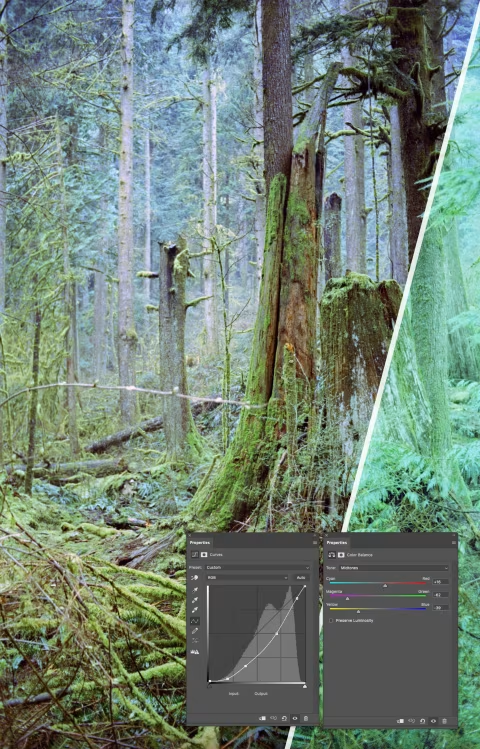
If you find yourself stuck with a green mess, know that there may still be a way to fix it. I did it by dropping the midtones towards purples, shadows towards reds and highlights towards the blues and purples. I can’t give you exact values, as they’ll vary depending on your scans and exposure, but you can refer to the greyscale masking method for a little help with the process.
How much does this film cost?
Candido 800 currently sells for about $18/roll of 36 exposures in 35mm (June 2026). Depending on where you shop, it may be your cheapest ISO 800 colour-negative film option.
Is it worth the price? Yes, many photographers were able to get good results with this film, yet I have not seen any portraits that feature clean, neutral daylight lighting and accurate colours. I’d leave it for nature shots, perhaps try nighttime scenes, unusual lighting that doesn’t need colour balancing, and street scenes.
Where to buy.
Please check your local shop or follow the links below to help support this blog with your purchase:
❤ Please consider making your Candido 800 Colour film purchase using this link so that this website may get a small percentage of that sale — at no extra charge for you — thanks!
