Fujifilm Superia Premium 400 Film Review
A Rare & Wonderful Made-in-Japan Colour-Negative Film — Still in Production!
9 min read by Dmitri.Published on .

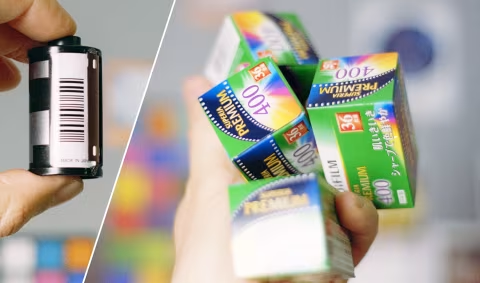
Fujifilm Superia Premium 400 is one of the last colour-negative films still manufactured by Fujifilm in Japan.
In this article, I’ll reveal the colours, contrast, and resolution properties of this elusive emulsion and answer the question I had looking at my eBay total: Is it worth importing from Japan?
Regular analog.mom readers may remember that Fujifilm-branded colour-negative films sold in North America, most of Asia, and Europe are now made in the USA. And the only factory on the continent capable of producing colour-negative film of this quality is operated by Eastman Kodak Company in Rochester. In other words, those films are not manufactured by Fujifilm and are unlikely to be using any of Fujifilm’s technology.
The existence of the Japan-made Superia Premium is mostly unknown within the Anglophone film photography community, which had already said farewell to this film in 2024 following Fujifilm’s notice of discontinuation. It’s only this year that it has resurfaced on the English internet, which piqued my interest, and I decided to buy a few rolls.
Fresh out of the development tank, my initial reaction was pure nostalgia for the familiar colours and a relief that this wonderful option still exists, even if in limited supply.
In this review: The Superia Premium colours. Datasheets. Grain, resolution, sharpness. Contrast, dynamic range, and exposure tips. Developing Fujifilm Superia Premium at home. Where to buy. Support this blog & get premium features with GOLD memberships!
Thank you, Lily Li Hua, for modelling, and Daren for his work and company during our shoot at the VanDusen Botanical Garden.

The Superia Premium colours.
Foliage and skin tones can often reveal the most prominent and distinct qualities of colour-negative films.
Newer, less advanced emulsions paint greens and the complex gamut of our bodies with fewer tones, making scenes appear chalky and unrealistic. It took Kodak and Fujifilm over a hundred years of innovation to dial in the accuracy and spectral sensitivity to formulate photochemical fidelity that matches some of today’s best digital sensors.
Though it may seem that all film brands would strive to achieve the same result — a perfectly accurate representation of reality — Kodak and Fujifilm have famously diverged into warmer (Kodak) and cooler (Fujifilm) palettes that cater to local preferences and define their product lines. These subtle differences can remain apparent regardless of scanners, film inversion software, and even digital edits.
Superia’s bright, minty greens and cool yet pleasant skin tones reminded me of the Japanese colour-negative films I’ve enjoyed so much when they were still available here, as soon as I’ve inverted my first frame.

As you can see, Superia images come out fairly bright — and that’s the case with different cameras, metering, and scenes. It looks brighter than most other films I’ve worked with in the past ten years. This observation may be subjective — I have not compared this film against other stocks one-to-one (yet) — though I have compared the US (Kodak) -made Fujifilm 200 film against Kodak Gold 200, and Fujifilm’s variant was also brighter (still similar in all other ways). Perhaps Fujifilm’s analogue imaging department simply favours lighter colours, and they’ve made it a point to request that Kodak sensitizes their film a little more; it’s also possible I made a mistake.
Understandably, not all portraits need to look airy, and not all scenes need to be pastels. Still, I really enjoy this look, and I’m not tired of it after blasting through two rolls just last week.
Thankfully, Superia Premium can take a fairly steep contrast increase without noticeable detail degradation or colour casts.
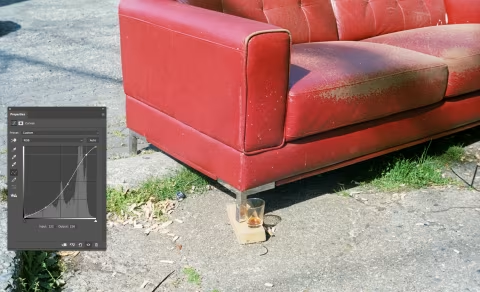
Edits or not, my experience with Superia Premium suggests that it will remain its own stock regardless of how it’s used. This distinction, along with the colour fidelity and resolution, made me feel justified in spending $35 USD per roll (including shipping and taxes). I bought five, but most sellers will add a slight discount if you get more.

Datasheets.
Fujifilm Superia Premium 400 datasheet is available in Japanese (last updated in 2019). Indeed, it has been around for years — just not here — and it is an updated version of the former Superia X-Tra film, which once featured a fourth cyan layer for better photos in mixed lighting (same as the discontinued Fuji Pro 400H). Current Superia does not have that fourth layer.
An English version of this datasheet is also available; however, it’s not an identical translation. The important technical details in both datasheets point to three key features:
1. “Super Uniform Fine Grain” — I’ll discuss the grain, resolution, and sharpness of this film in detail below, though it’s fair to say that this film impressed me with its smoothness.
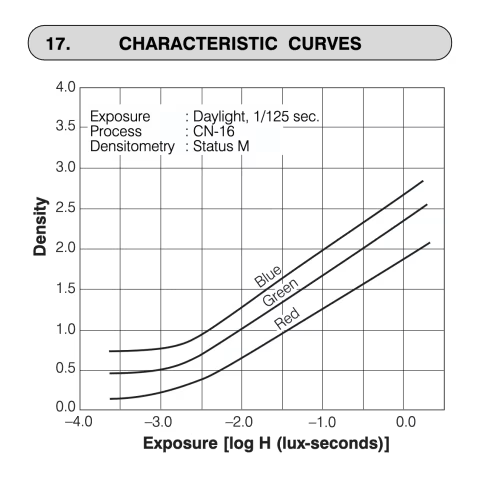
2. Wide exposure latitude & good tolerance of overexposure and underexposure. The Characteristic Curves chart in the datasheet indicates a span of about 2.75 𝚫lux-seconds, which corresponds to 9 stops of dynamic range. In simpler terms, this makes Superia Premium a reasonably forgiving, low-contrast film. I’ll talk more about contrast, dynamic range, and exposure further below.
3. Natural skin tone reproduction. Check. I’ve had great results with this film, based on how I saw my subjects compared to what I got straight from the scanner before edits. In fact, most films require some work to get to their ideal colour balance (this is true of scanners and darkrooms), whereas Superia Premium appears mostly unchanged across all the photos attached to this article. Like all my other films, I’ve inverted Superia Premium using histogram stretching via film Q.

Grain, resolution, sharpness.
Superia Premium is a fine-grained film, especially for an ISO 400 colour-negative speed. In the datasheet, Fujifilm marks it as an RMS 4, which makes it one of the finest-grained films out there — but that measurement is imperfect, as this and most other colour-negative films will have granules of various sizes (largest in the shadows and smallest in the highlights).
Kodak had long switched to the Print Grain Index measurements, which are obtained via a survey of participants — the best method, in my opinion.
Fujifilm also shares the resolving power of this film (50 lines/mm for 1.6:1 test-object contrast and 125 lines/mm for 1000:1 test-object contrast). Yet these numbers may also mean little other than confirming that this film is smoother in the highlights and coarser in the shadows.
Regardless of the size, Superia Premium’s grain is fairly sharp, as is often the case for colour-negative films (but not slide films).
This film is only available in the 135 format.

Contrast, dynamic range, and exposure tips.
A forgiving film like the Superia Premium, with a wide dynamic range, will preserve more detail in the shadows/underexposures and highlights/overexposures. The tradeoff is low overall contrast.
For Superia Premium, this is absolutely the case, especially in deep shadows and with underexposure. For example, the portrait below looked a little pale and uninteresting until I added a touch of contrast back; this made it darker but more appealing, closer to how I remember the scene.
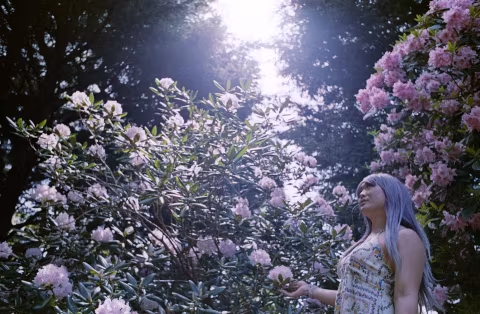
I’ve metered most of the scenes here with my Nikon F3 set to 1/3-stop overexposure, which, in retrospect, was unnecessary, as this film is very bright. I don’t recommend underexposing this film either, as that may require some post-scan edits to restore contrast — but it’s good to have that option, since Superia Premium is very easy to work with.
In summary, meter normally and don’t be too afraid to make mistakes or add edits, provided that your scans are of sufficient quality. High-key and high-contrast scenes can look very good on this film.

Developing Fujifilm Superia Premium at home.
If you develop your film at home or simply pay attention to the negatives, you’ll notice a specific Fujifilm font, with the edge colour markings for scanner calibration. I’ve also noticed that it’s much easier to see red colours (which appear green on a negative) than on other masked colour-negative films.
Superia Premium uses a fairly thick base, making it easy to load onto reels, and it dries fast, too.

Where to buy.
Fujifilm only officially sells this film in Japan. If you plan to visit the country, this could be a good product to add to your shopping list. Otherwise, eBay may be the best source at the moment, since other shops likely buy in bulk from there anyway. Remember to look for reputable sellers with good ratings! — See this guide for more details.
❤ Please consider making your Fujifilm Superia Premium 400 film purchase using this link so that this website may get a small percentage of that sale — at no extra charge for you — thanks!
