Ilford Delta 3200 Review
A Long-Term Review With Tons of Samples, and Developer Tests
14 min read by Dmitri.Published on .

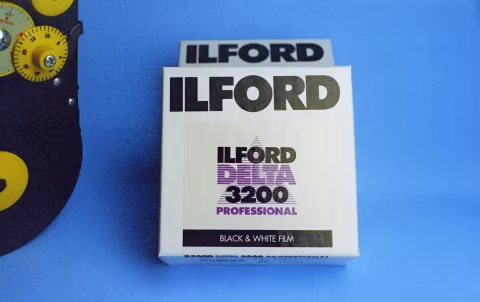
Ilford Delta 3200 Professional is a highly sensitive black-and-white film, suitable for fast-action and dim-light photography.
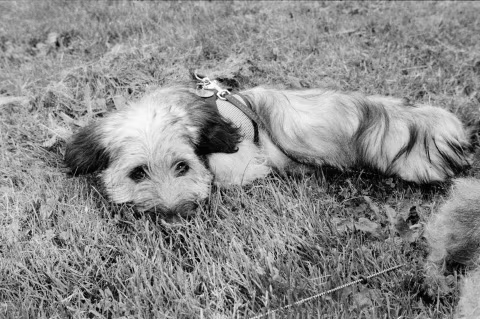
The film is particularly convenient in British Columbia, where gloomy winters and rainy weather often call for a faster black-and-white film. I also found it helpful for taking pictures of my pets, when extended depth of field and a fast shutter are a must to avoid smudgy shots.
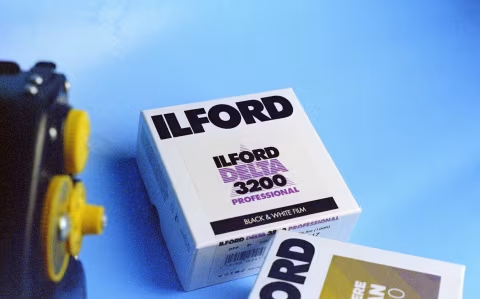
Ilford has one of the best distribution networks for its films, making this and other films easily available around the world — including my local drugstore chain (which also happens to develop film). As a result, I’ve shot Delta 3200 in some of my favourite film cameras of all time — like the Hasselblad XPan, Nikonos V, Nikon F3, and Voigtländer Vitessa A — and tried it with several exposure settings and development recipes: Rodinal 3200, Rodinal EI 1600, Ilford DD-X 3200, and Kodak HC-110 3200.
In this in-depth review, I’ll share lots of samples from the above hardware/chemistry combinations and discuss the properties of this iconic high-speed emulsion that I’ve discovered over the six years I’ve spent with it so far.In this review: Is the ISO 3200 real? Resolution and sharpness. Dynamic range and contrast. Ilford Delta 3200 in DD-X. Ilford Delta 3200 EI 1600 in Rodinal. Ilford Delta 3200 in Rodinal. Ilford Delta 3200 in Kodak HC-110. Scanning, editing, and restoring highlights. Price and availability. Support this blog & get premium features with GOLD memberships!
Is the ISO 3200 real?
Ilford developed Delta 3200 specifically to be exposed as if it’s an ISO 3200 film. However, the actual measured ISO is 1000, so “ISO” 3200 is a suggested exposure index (EI) with development times formulated accordingly. Shooting this film at lower EI does not necessarily yield finer grain or improved contrast — this film is made to be fast.
You can find development times for this film in the range of EI 400-12800. In this article, I stuck to 3200 and 1600.
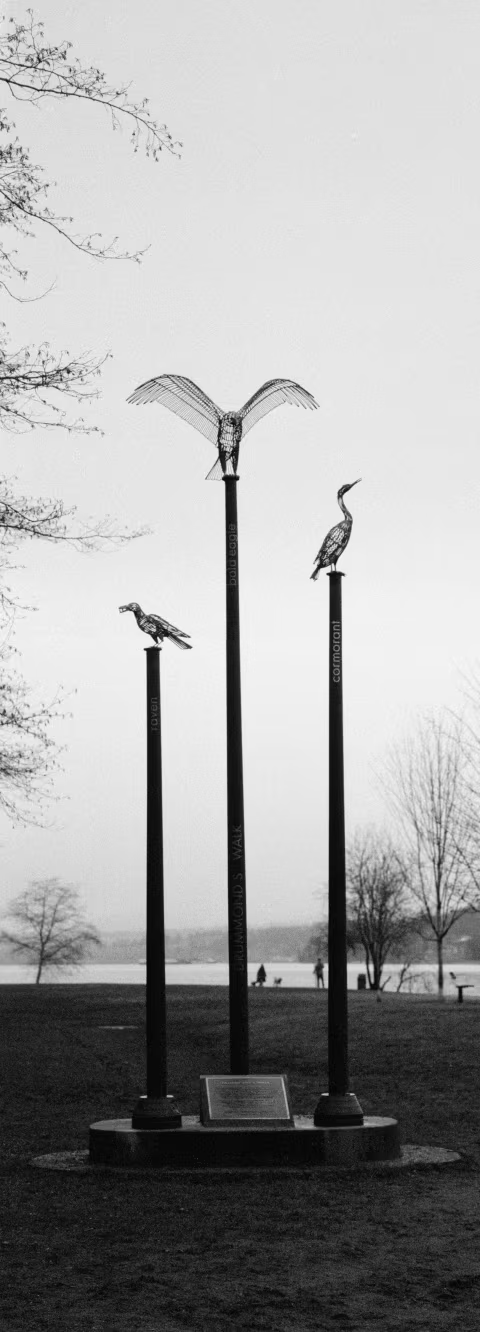
Resolution and sharpness.
Fewer photons means that the microscopic clumps of photosensitive chemicals must be larger to capture enough light for an image. That’s a grossly simplified explanation of why Delta 3200 is so grainy.
Ilford Delta films are made with T-Grain technology, which reduces the apparent grain size — without it, this film would be much grainier (just look at the photos of the non-T-Grain Ilford HP5+ pushed to ISO 100,000).
The individual granules, when scanned at high-resolution (without sharpening), can appear very sharp on this film. I used Nikon SUPER COOLSCAN 5000ED with film Q to invert the negatives without any corrective edits. If you’re seeing these images on a large monitor, you’ll probably notice how “crunchy” the individual specs appear.
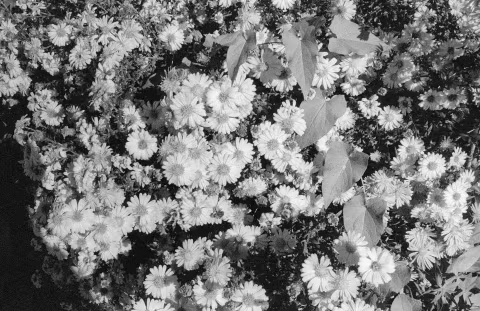
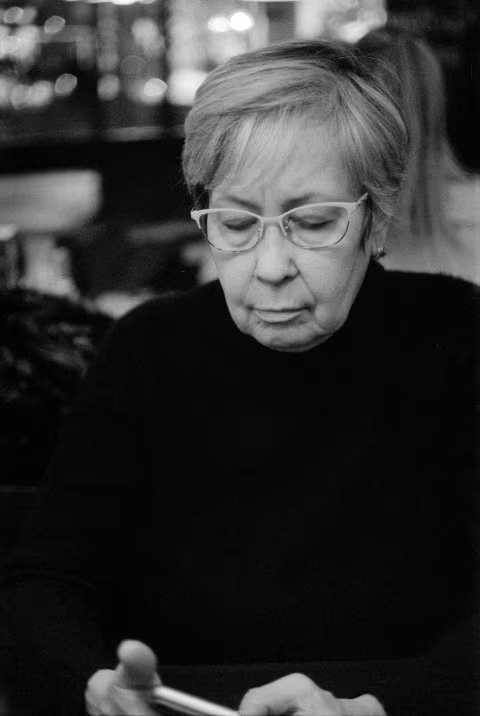
However, grain sharpness can be altered on black-and-white film with the choice of a developer. The above photo of daisies was developed in Rodinal, a formula known for its stability, versatility, and for producing sharp-looking grain on film. Compare that to the same film developed in Ilford DD-X (a portrait of my mom, below) — a developer known for expertly smoothing out the grain on black-and-white films.
The type of developer used with Delta 3200 can make a noticeable difference. The grain is so apparent that changes which fine-grained films can hide behind their smooth texture become amplified by the size of individual granules of this film.
Note that Rodinal is not the grainiest option with Delta 3200 — out of my tests, this trophy belongs to Kodak HC-110. See the samples and the discussion below.
Dynamic range and contrast.
Regardless of the kind of developer you or your lab is using with this film, it will behave about the same in terms of contrast and dynamic range.
Ilford’s datasheet for this film shows a slight increase in density (how dark the negatives look) with additional development time. In practice, this usually means that Delta 3200 will simply show more contrast at higher speeds (i.e., the box 3200) than lower speeds (i.e., ISO 1000).
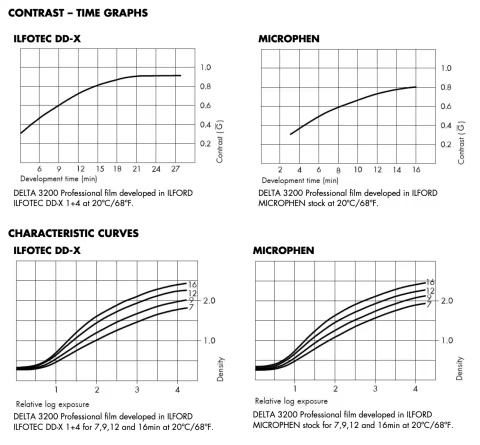
The dynamic range, that is, the distance in stops between the brightest and darkest detail this film can capture, is about 12-13 stops, which is slightly above average as compared to the films I’ve tested so far. This is based on the data Ilford shared with their DD-X and Microphen developers, converted from lux-seconds to stops.
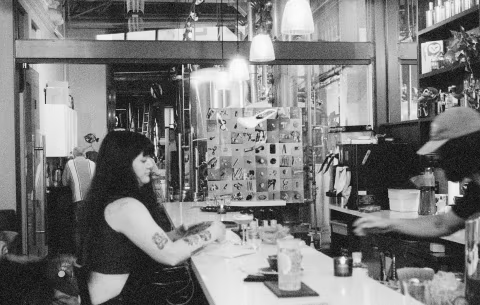
Given how inky-black the shadows appear on this film, I initially assumed this film would be difficult to get right. Thankfully, this is just how Delta 3200 renders its contrast on the low end, which becomes significantly tamer in the midtones. The film leaves ample room for details in high-contrast lighting, which is what I had when I photographed Moscow subway stations for my book six years ago.
Ilford Delta 3200 in DD-X.
Before digital became the dominant medium in photography, most people may have preferred less or no grain in their images. Grain can appear distracting, and it could obscure details. But as our ability to produce grain-free images evolved, grain became desirable for many again.
Research suggests that we actually perceive grainy images as sharper, whereas artists and new-to-film photographers appreciate the complexity and non-uniform nature of image texture that’s no longer prevalent in modern photography.
However, the grain on Delta 3200 is particularly pronounced, which can feel distracting for the message an image is meant to convey. Thankfully, there is a way to tame it significantly, and that is to use the Ilford DD-X black-and-white film developer.
Developed by The Lab in Vancouver in DD-X, my Delta 3200 gave me the smoothest results out of everything else I’ve used.
The grain is still there, still the same size, but the transition between each particle is much smoother, which left the images looking slightly textured but not nearly as coarse as the sandpaper-like results with Rodinal or HC-110:


Ilford Delta 3200 EI 1600 in Rodinal.
If Delta 3200 (which isn’t even its real ISO) is grainy, surely it’ll be smoother when exposed to more light at EI 1600, right?
It’s not unreasonable to expect finer grain with more light. Rating this film at EI 1600 instead of the box 3200 doubles the amount of light the camera sends to the emulsion and changes the development times. Most modern films, including Delta 3200, produce various grain sizes, with the smallest ones reserved for brighter sections of an image (since they don’t need to capture as many photons).
Unfortunately, photochemistry is more complicated than that. Pull-processing does not necessarily reduce grain size, even if it can look a little different as a result (see this article, in which I describe my experience pull-developing HP5+, shot at IE 3).
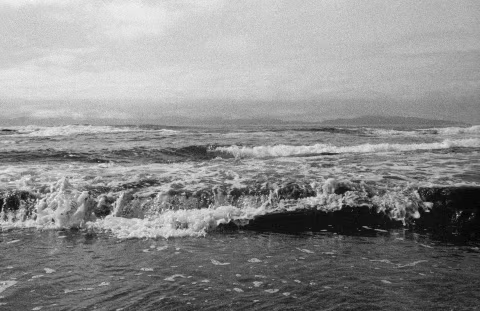
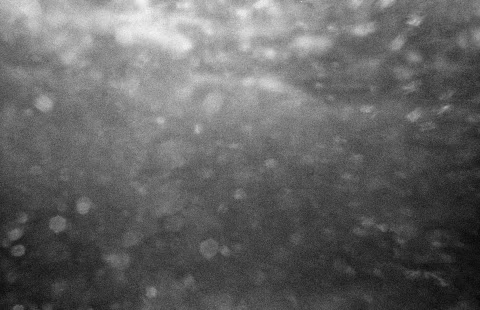
Exposing Delta 3200 at EI 1600 has no advantages when developed in Rodinal. It looks just as grainy as EI 3200. I’d even suggest that the shadows are muddier than with the box speed with the same developer:
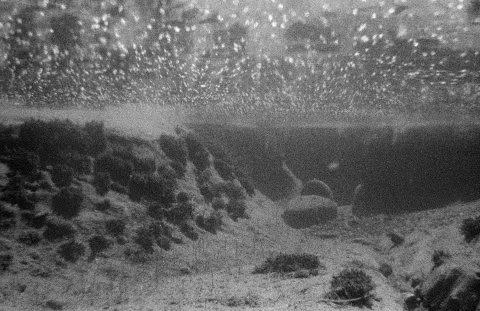
Ilford Delta 3200 in Rodinal.
At box speed, Delta 3200 is grainier in Rodinal than in DD-X, but it’s not bad at all. I absolutely prefer these results to those I got with the same developer but at EI 1600.
The film is a little coarse, but I don’t find it muddy or lacking resolution.
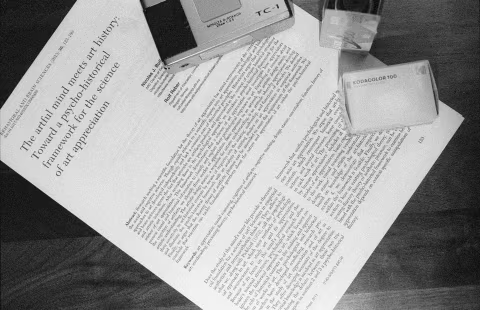
I like how Delta 3200 looks in 35mm, and if you shoot it in medium format, you may not find this film grainy at all with Rodinal. My samples from XPan may give you an idea of what to expect from this film in a slightly larger format than the “miniature” 135:

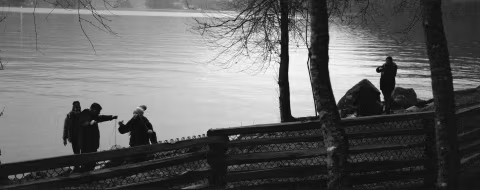
Rodinal is one of the easiest and most affordable developers to source worldwide, which is why most of my Delta 3200 film was developed in it.
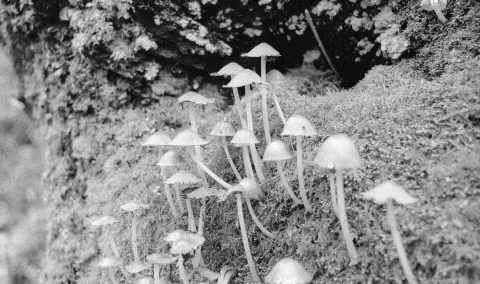
This film can be tricky to shoot in daylight, as in full sun the camera would have to have a shutter capable of 1/4000s or an aperture of f/64 with the more-common 1/500s shutter (see the Sunny 16 Calculator app). Still, it’s incredibly helpful for fast-moving subjects like an energetic puppy and deep forest shadows where the dog and I often explore here in British Columbia.
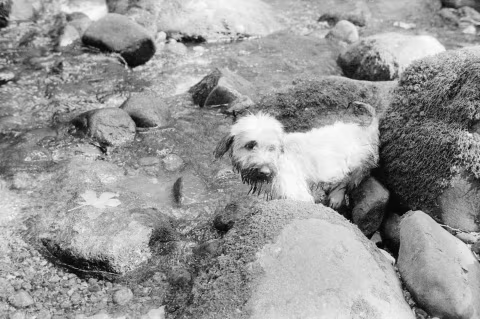
Ilford Delta 3200 in Kodak HC-110.
Rodinal is my go-to black-and-white film developer; still, I always wanted to try HC-110, which is what I did with this film first. The results felt like a mistake.
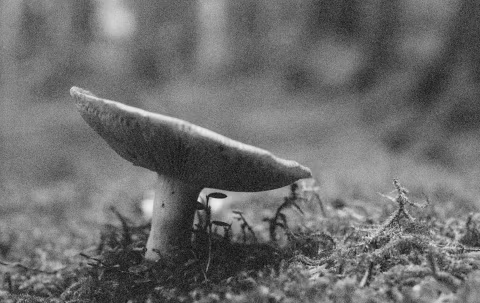
Having researched some literature online, I picked dilution A (1+15), which was promised to have reduced grain due to a shorter development time. Apparently, that wasn’t enough:
If you aren’t reading on a large screen, scroll down to the Scanning, editing, and restoring highlights section for close-ups.
While this much grain may not matter on a mobile screen, it is certainly noticeable on a laptop and in print. 8 minutes in HC-110 Dilution A produced unusually noisy shadows with Delta 3200.
I suppose that could look desirable. For example, I enjoyed Danilo Leonardi’s essay, “Clusters of Discrete Dots,” where he likens his grainy results from a 110 camera to the “pointillism” technique in painting. I wasn’t aiming for that; thus, I won’t pretend that this much grain was expected or wanted from HC-110 after developing Delta 3200 in Rodinal for years.
I would not avoid this combo entirely, but I would be cognisant of how coarse the Delta 3200 grain is when developed in HC-110.


Scanning, editing, and restoring highlights.
As with the grain size, the same rules apply when editing this film: this will matter more on larger screens and in print.
Developed in Rodinal and DD-X, Ilford Delta 3200 is flexible enough to allow significant changes to its contrast, like bringing out details in the shadows or taming the highlights.
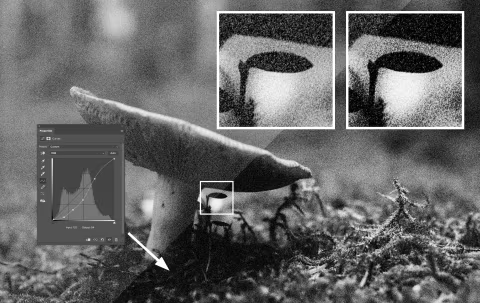
However, the grainy results from HC-110 weren’t as malleable. Adding or removing significant amounts of contrast made the images appear worse. For example, when I tried to hide some of the noise in the shadows by reducing their brightness, I could not accurately separate the grain from dark details. Additionally, the texture in the shadows after such an edit becomes unnaturally smooth, even plasticky, compared to midtones, which will remain coarse.
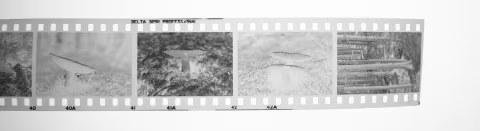
Other than the issues I’ve had with my attempts to edit my HC-110 scans of Delta 3200, this film is relatively easy to scan and invert. The 35mm roll dries flat, and the film base colour is neutral grey, meaning it should appear greyscaled, even if you scan it in colour.
The base isn’t completely clear; thus, simply flipping the colours won’t be enough to invert this film. Though it’s not that difficult to either compensate for the mask manually or with tools like film Q, using the histogram stretching technique.
Price and availability.
Delta 3200 isn’t cheap. It’s the second-most expensive film after Kodak T-Max P3200, costing $16.50 USD a roll in 2026 — but it is still cheaper than most premium colour films, such as Kodak Ektar, CineStill films, slide films, etc. Best of all, it’s usually in stock at most places that sell black-and-white film.
❤ By the way: Please consider making your Ilford Delta 3200 Professional film purchase using this link so that this website may get a small percentage of that sale — at no extra charge for you — thanks!
