Fujifilm Fujicolor 100 (Japan Only) Colour-Negative Film Review
Outstanding Grain & Colour Stability
12 min read by Dmitri.Published on .

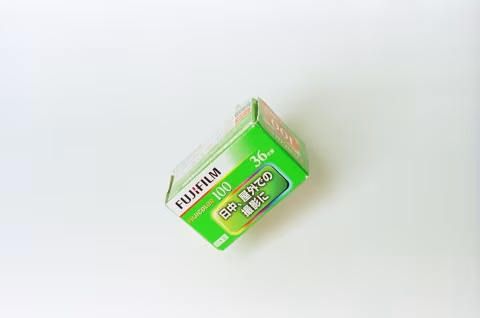
Fujifilm Fujicolor 100 is made in Japan — but this film is not available anywhere else in the world, unless you’re willing to import it.
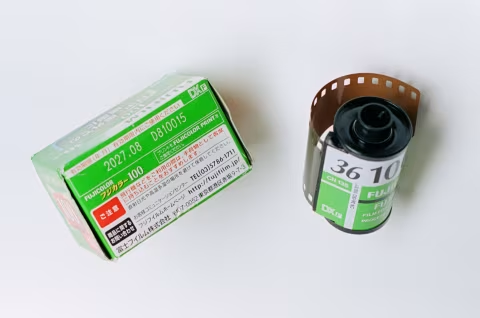
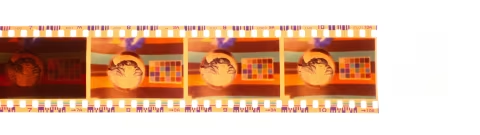
This is not a respool of any Kodak film: it looks unlike anything made in the ‘States — I’ve checked! — and the edge markings on this inconspicuous roll, when developed, bear unmistakable Fujifilm design and typography.
In this review, I’ll explain why you may want to pay a little extra to try this film or pick up a roll at a good price if you see one.
In this review: A brief history (what is this film?). The colours. Grain, resolution, sharpness. Contrast and dynamic range. How much does this film cost? Where to buy. Support this blog & get premium features with GOLD memberships!
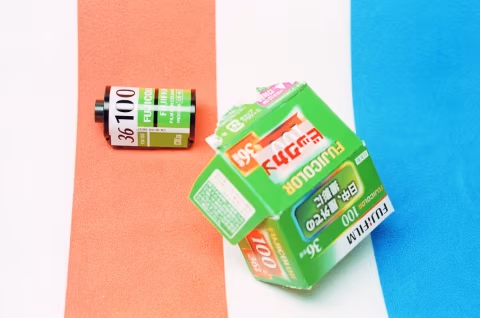
A brief history (what is this film?).
Fujifilm is a controversial brand. Many swear by its products — films such as Velvia and Provia are considered unparalleled in their image quality — but the multi-year streak of discontinuations has collapsed its catalogue to just seven options, two of which aren’t even made at its factories.
Earlier discontinuations were blamed on waning customer demand. But that was in the 2010s — today that can no longer serve as an excuse. And so Fujifilm’s latest round of discontinuation announcements blames the inability to source raw materials. In all fairness, the company is also facing procurement issues with its latest digital cameras.
As of August 2026, Fujifilm does not sell any colour-negative film made on its own factory floors to anyone outside Japan. Even then, its offerings are very limited. Japanese shops can only get so much domestically made Fujifilm product. Furthermore, the company recently stopped selling multi-packs (although single rolls are still available — and in high demand).
In 2026, the only two colour-negative films made directly by Fujifilm and manufactured in Japan are Superia Premium and Fujicolor 100. These films are easy to tell by the edge markings, which feature classic Fujifilm typography and calibrating colour lines no other modern brand prints.
Other films, such as Fujifilm 400 and Fujifilm 200, sold worldwide, are made in the US (as it says on the packaging) — which can only mean that an old rival is making emulsions for the Japanese photography giant: Kodak.
I’ve already reviewed Superia Premium — a film that belongs to the lineage of Superia films which originally featured a fourth cyan layer to help balance mixed light sources. (That layer is no longer part of the original technology). When I began my research on Fujicolor 100, I first thought it was a descendant of Superia 100 — but that is not the case, as both films were briefly available and sold as different products around 2008-2009 (Superia 100 was discontinued in 2009 according to Wikipedia, although there is no direct reference that proves the date).
Fujicolor 100’s official datasheet’s URL suggests it was published in 2019; however, some photographers note they began seeing this film around 2008.
The colours.
A film’s colour properties can be tweaked during enlargement, scanning, and editing. Some films, like Kodacolor 100 and Lomography CN 100, are so similar they could be edited to look identical (especially when viewed on a small screen without a reference).
However, some key properties of our films aren’t affected by edits or scanning techniques. For example, contrast and saturation adjustments can quickly pass a threshold after which details will disappear, replaced by noise. Meanwhile, adjusting the colour balance for one part of the image will inevitably push the rest in the opposite direction.
The first notable property of Fujicolor 100 that can’t be replicated via edits is its ability to keep its colours from shifting during over- and underexposure.
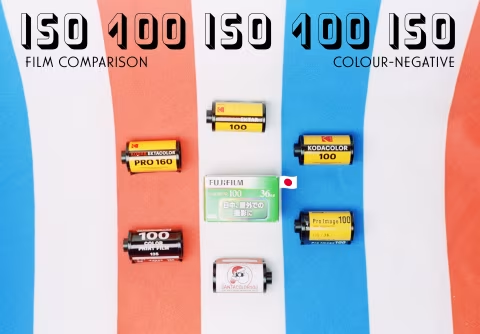
I’ve tested this film by bracketing two stops in either direction alongside other ISO 100 films using a standardized reference image. Each time, it outperformed all other films by keeping its colours largely the same, whereas the rest would drift their balance and saturation.
In practice, this means Fujicolor 100 can forgive exposure mistakes and work well in high-contrast scenes. Unlike Kodak films, which tend to cast purple, teal, orange, or dark blue shadows that can’t be easily corrected, Fujicolor 100 will remain neutral.
☝︎ Further reading: “Comparing All (7) ISO 100 Colour-Negative Films.”
You can observe Fujicolor 100’s unique ability to handle harsh changes in light compared to other films in my recent comparison of all the currently available colour-negative films on the market (linked above).
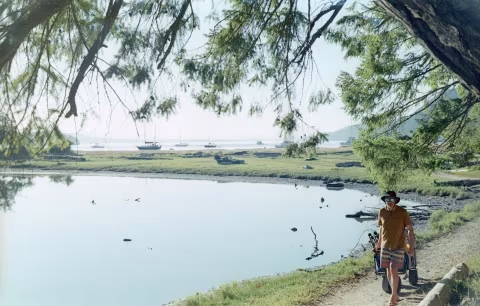
Fujicolor 100’s colour stability in the face of exposure changes does not imply that it’s a stock free of character. It absolutely has a look.
The colours I get from this film after scanning with my Nikon COOLSCAN 5000ED, using neutral settings and inverting with film Q, are bright but not particularly saturated. A low-contrast look makes a lot of sense, considering how well this film handles exposure changes (unlike high-contrast films, which tend to be more sensitive).

As mentioned earlier, scanned and printed colour films can take on various looks depending on the edits. Some properties will remain, but things like colour temperature and contrast could be changed — in fact, they can change on their own simply via altering the light quality of a scene being photographed.
For example, the strong daylight with some haze in the background could be made to look cool, as in the photos below:

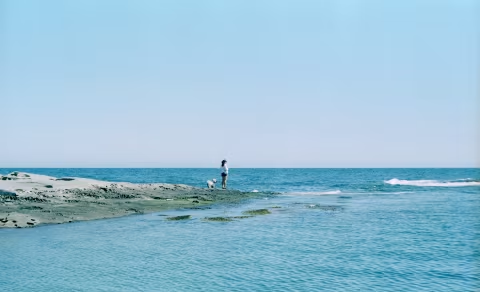
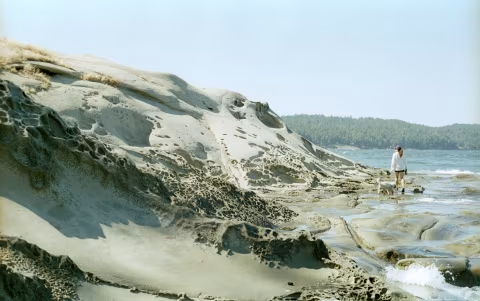
Scenes with large, bright objects, like the incredible rocks on a small island, that soften shadows by reflecting some light back, can be made to look warmer.
The edits don’t necessarily have to conform to the scene, though I found that having more definition in the shadows somehow facilitates a warmer look on this film. Note how the colour of the sky in the photo above and below is very similar, yet the midrange is much warmer in the photos below:

Fujicolor 100 is a relatively fine-grained, medium-low-contrast film, which makes it a good candidate for colour edits. I would avoid overdoing it, of course; still, those properties give it the flexibility other films may convert into harsher grain and lost detail.
The photo of the sunset below was originally overexposed because I was trying to meter for the shadows a little more than necessary, which led to some lack of colour. I was able to fix all of that in Photoshop fairly easily without any noticeable degradation.

Overall, my experience with Fujicolor 100 has been very good, particularly in the colours it produced for me once developed. It gave me a lot of room to play and edit the images, and it produced what I think are pleasing colours on unedited scans as well.
Of course, there’s no such thing as a perfect photography product. Fujicolor 100 can appear noisy in the shadows; without edits or a bump in saturation — whether deliberate or automatic by the scanning software — it may appear dull (particularly when overexposed); and lastly, like all other domestic Fujifilm film products, it is designed to create flattering portraits for the stereotypical Japanese complexion, which could leave your pale subjects looking greyer than usual.

Grain, resolution, sharpness.
The datasheet for this film boasts the “New Super Uniform Fine Grain” feature, which I assume is designed to keep the film’s grain in check across various exposure levels.
Typically, modern films render their finest grain in the highlights, and the coarsest “granules” appear in the shadows, since the latter require a greater surface area to absorb fewer photons. New (experimental) films like the Harman Phoenix don’t seem to exhibit this quality, which can make them appear uniformly grainy, regardless of how much light you point at them. This almost seems to be the case with Fujicolor 100 — except its grain is much finer than that of Phoenix and the highlighted areas still seem to benefit from a softer or finer grain appearance.
You can expect roughly the same results from this film when it comes to grain size, as you would from films like the Kodak Pro Image 100, but with smoother shadow regions.

Contrast and dynamic range.
Films like Kodak Portra / Ektacolor Pro 800 boast some of the most impressive dynamic range specs around (12.5 stops). You could shoot that film as if it were ISO 200 film and still get decent or even preferred results. Fujicolor shares some of that flexibility: its colours remain remarkably stable across exposure levels, and its grain size is locked in even when underexposed. Which is why I was surprised to learn that its dynamic range is only around 8.5 stops (converted from ~2.5 𝚫lux-seconds).
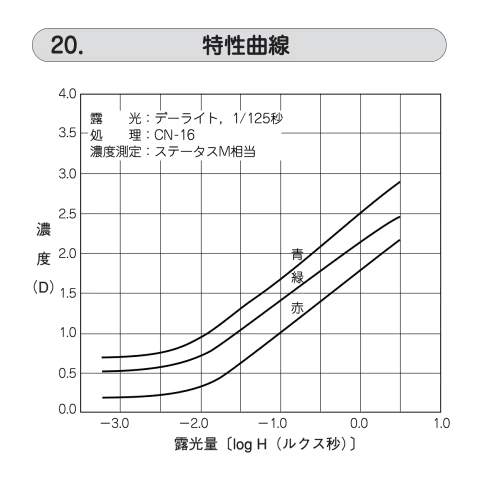
8.5 stops of dynamic range is about what other low-end (on the pricing scale) consumer colour-negative films offer; this matches the Fujicolor 100’s niche — yet it’s better than other films with similar specs at handling exposure (at least when it comes to colour).
It’s possible that the way the film shapes contrast, along with a generous roll-off in the highlights, is what gives it an advantage over other films of its calibre. The three lines that comprise the characteristic curves are invaluable in determining the properties of the film, but they don’t tell the whole story.
For example, I can tell from the graph above that the film can handle a good amount of overexposure and that it has definite limits when it comes to underexposure. Indeed, areas that appear particularly dark will remain pitch black with no chance of recovery. Yet the chart cannot explain how this film keeps its colours in check in the fringes when other films struggle, or why Fujicolor 100 is so pliable when it comes to creating a final image.

How much does this film cost?
This film will sell for less in Japan, but if you’d like to import it, it’ll cost $20-$25 plus shipping. Be careful not to confuse it with Fujifilm Industrial (an ISO 100 version of this film), the US/Kodak-made Fujifilm 200/400 films, or expired film rolls.
In general, film should last well beyond its expiration date — Fujicolor 100 is said to be a long-lasting emulsion, according to the datasheet — so if you can get a deal on an older pack, I’d take it. I would only be careful to ensure that you’re buying the same product that’s being reviewed here. (Yes, other films are good too, but then you may have to adjust your pricing expectations accordingly).
Where to buy.
If you’re reading this, you’re probably not in Japan. Your best bet is to see if someone nearby has imported this film for you or to buy your roll directly from a Japanese retailer on eBay.
Good luck and enjoy this incredible product while it’s still in production!
❤ Please consider making your Fujifilm Fujicolor 100 film purchase using this link so that this website may get a small percentage of that sale — at no extra charge for you — thanks!
